Guides
Rush Order Fees: How Much to Charge When a Customer Needs It Sooner
How much to charge for a rush order: set your normal lead time, price the evening hours and extra costs, add a minimum, and take full payment first.
9 min read
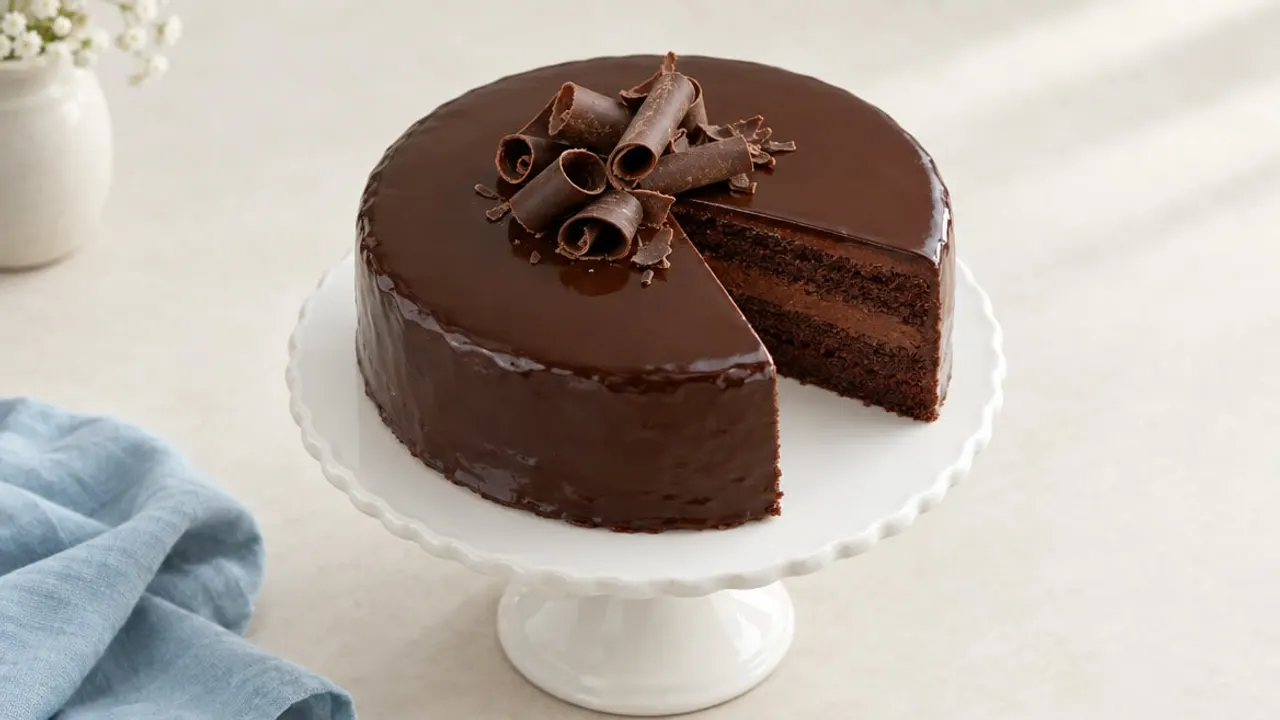
Short answer: a rush order fee is an extra charge for finishing an order sooner than your normal lead time. To set yours, first write down your normal lead time. Then price what the rush really costs you. That is your evening or weekend hours, any extra supplies or faster shipping, and the orders you push back. Turn that into two or three simple tiers with a minimum fee. Ask for full payment before you start, and only say yes when you are sure you can finish on time.
It is Thursday evening, and a message arrives: “Can you do a birthday cake for Saturday?” Your normal wait is a week. You could do it, but it means baking on Friday night and moving another order to Sunday. If you charge your normal price, you pay for the rush yourself, with your evening.
A rush fee is not a penalty for the customer. It pays for the extra work a short deadline creates. This guide shows how to work out a fair fee and set simple tiers. It also covers what to put in writing and when to say no. The examples use US dollars, but the method works in any currency.
1. Write down your normal lead time
You cannot charge for a rush until you know what “normal” is. Your lead time is the number of days you need from taking an order to handing it over. Count it for a normal week, not an unusually full one.
To find it, look at your last 10 or 20 orders. Count the days from the order to the due date, and how many of those days were real work. Then add the time your other orders take up. For most custom makers, this comes to somewhere between a few days and a few weeks.
7 days
In WISMO’s data, the median order was due 7 days after the seller created it. One order in ten was due 22 days or more after it was created. Your trade may be faster or slower, so use your own orders, not ours.
Write your lead time where customers will see it, such as your profile, your price list or your store page. For example, “Custom cakes need 7 days’ notice.” Now any order with less notice is a rush. You do not have to argue about it each time.
2. Work out what a rush really costs you
A rush order usually takes the same hours to make as a normal one. What changes is when you work, and what else gets moved. A fair fee covers three things.
Your out-of-hours time. A rush often means working evenings or a weekend. If you have staff, US law sets a floor for this. The Department of Labor says covered employees must get overtime for hours over 40 in a workweek. The rate is at least one and a half times their regular pay. Your own evenings are worth at least that much too. So a simple rule is to charge 50% extra on the hours you move out of your normal week.
Extra costs. These are costs you would not have on a normal order. One example is buying supplies at a nearby store instead of cheaply online. Others are a courier or a faster shipping service.
The order you push back. If the rush takes the place of another order, that customer may wait longer. In a full week, you might even turn a normal order away. This cost is real, even though it is hard to put a number on.
Here is a worked example. All the figures are illustrative.
Worked example: a rush birthday cake (illustrative)
Your normal price for a custom cake is $150. That covers $30 of ingredients, 4 hours of work at $25 an hour ($100), and $20 of profit. Your lead time is 7 days.
A customer wants the cake in 2 days. To do it, you move all 4 hours to Friday evening.
- Out-of-hours time: 4 hours × $25 × 50% = $50
- Ingredients bought locally the same day, instead of your usual order: about $10 more
The rush costs you about $60, which is 40% of the cake’s price. A rush fee of $60 pays for it. A fee of $15 would mean you paid for most of the rush yourself.
You do not need to do this sum for every order. Do it once or twice for a typical job. Then use the answer to set the tiers in the next step.
3. Turn it into simple tiers
Customers understand a short, fixed list better than a new price every time. There are three common ways to price a rush.
| Method | How it works | Works best for |
|---|---|---|
| Percentage | A share of the order price, for example 25% or 50% extra | Orders that vary a lot in price, such as cakes, tailoring or commissions |
| Flat fee | A fixed amount, for example $20 or $40 | Low-priced items, where a percentage would be too small |
| Percentage with a minimum | A percentage, or a fixed amount if that is more | Most small sellers, because it covers both cheap and large orders |
The minimum matters more than it looks. A 25% fee on a $12 item is $3. That will not pay for even one evening. A minimum fee covers the real cost of rearranging your week, whatever the order is worth.
You can then link the fee to how much sooner the order is needed. Here is an example policy based on a 7-day lead time.
Rush fee tiers (illustrative)
- 7 days or more: normal price, no rush fee.
- 3 to 6 days: 25% extra, or $20, whichever is more.
- 1 to 2 days: 50% extra, or $40, whichever is more.
- Same day: not available.
- Rush orders depend on my schedule. I will confirm before you pay.
Check your tiers against the worked example in step 2. In that example, a 2-day cake costs about $60 to rush. A 50% tier on a $150 cake is $75, so it covers the cost with a little to spare. If your sum gives a much higher figure, raise the tier.
4. Decide how payment works
A rush order has no time for chasing a balance. A normal order might have a week between the deposit and pickup. A rush may have two days. So set clear payment rules before the first request arrives.
- Full payment before you start. If you take a deposit on normal orders, ask for the whole amount on a rush. If you usually take a deposit, see how much deposit to take.
- The fee on its own line. Show the rush fee as a separate line on the quote and the invoice, not hidden inside the price. The customer sees what they are paying for, and you can see later how much rush work earned you. Our guide to custom order invoices shows the layout.
- Shipping is separate. A rush fee pays for making the order sooner. Faster shipping is a different cost. For the 2026 holidays, USPS recommends sending Priority Mail Express by Saturday, December 19, for delivery before December 25 in the contiguous US. If a rush order also needs fast shipping, quote both.
- Say what happens if they cancel. Say whether the rush fee is refunded if the customer cancels after you have started. Write it in your terms. Our guide to custom order terms and conditions has a template you can adapt.
5. Only promise a date you can keep
A rush fee does not add hours to your week. It only pays for the hours you have. Before you say yes, check three things:
- Your calendar. What is already due that day and the day before? Would the rush make another order late?
- Your supplies. Can you get every material in time, or will you be waiting for a delivery?
- The customer’s side. Do you have everything you need from them, such as the design, the size or the text? A rush order with a slow customer is still late.
The law in the US and the UK expects you to be able to meet a date you promise. The FTC’s mail order rule covers orders taken by phone, mail or online. It says a seller must have a “reasonable basis” to expect to ship on time. If you then cannot ship on time, you must tell the customer and offer them the choice to cancel for a refund. The rule covers goods, not services.
In the UK, the Consumer Rights Act 2015 lets a customer end the contract if you deliver late and the date was essential. It counts as essential if the customer told you so before you agreed to the order, or if the situation made it clear. A rush order is usually exactly that case, because the date is the reason for the rush. This is a summary, not legal advice. If you are unsure, check the rules where you sell.
When the answer is no, say it kindly and give the next date you can do.
Message: saying no to a rush (illustrative)
Hi Sarah, thank you for thinking of me. I am sorry, but I cannot make a cake for this Saturday. My week is already full, and I do not want to rush your order and get it wrong. I can do it for next Thursday. Would that work for you?
Message: saying yes to a rush (illustrative)
Hi Sarah, yes, I can make the cake for Saturday at 2 p.m. Because it is less than 7 days away, there is a rush fee of $75, so the total is $225. Please pay the full amount today, and I will start tonight. The rush fee is not refundable once I start baking.
6. Watch out for these mistakes
- Waiving the fee for everyone. If you skip it “just this once” for every customer, you have no rush fee. Keep waivers rare, for example for a regular customer with a real emergency, and say it is a one-time exception.
- Saying yes before you check. Read your calendar first, then reply. A late rush order costs you the fee, the customer and possibly a refund.
- Taking too many. Decide how many rush orders a week you will accept, even if every customer would pay. Two rush orders in one week can make your normal orders late.
- Rushes caused by your own delay. Sometimes the customer ordered on time and you fell behind. Do not charge them a rush fee to catch up. See what to tell a customer when an order is late instead.
Rush requests are easier to answer when your holiday plan is ready. Set your rush fee at the same time as your holiday order cut-off date. Then you have an answer ready for the “Can you still do it by Christmas?” message.
How WISMO helps with rush orders
WISMO is an order tracking app for small sellers. It does not set your prices or take payments for you. It helps you see whether you have room for a rush, and keep track of it once you say yes.
- See your week before you say yes. The calendar shows every order by its due date. You can check what is already due on Saturday before you reply.
- Add the rush fee as its own line. An order can have more than one item. So the rush fee can sit on its own line next to the cake. The free invoice shows it to the customer.
- Mark it as urgent. Add the Urgent tag. You can then filter your order list to show only urgent orders.
- Get a reminder. At 8 a.m. in your time zone, WISMO reminds you about the orders due tomorrow.
- Record the payment. Mark the order as paid, so you know it is settled before you start.
- Let the customer check. Share a tracking link. The customer can then check progress instead of messaging you on the day.
Your first 30 orders are free. After that, WISMO Pro costs $9.99 a month or $99.99 a year. You can try Pro free for 7 days. See pricing.
To check whether a rush date is possible, enter today’s date and your making time in our free order due date calculator. It shows the earliest date the order can be ready. For the full method behind your normal price, read how to price custom orders.
Common questions
How much should I charge for a rush order?
There is no single right number. Start with what the rush really costs you. That is the hours you move into evenings or weekends, extra costs such as faster shipping, and the orders you push back. Then turn it into simple tiers. For example, charge 25% extra for a few days early and 50% for one or two days, with a minimum fee.
What counts as a rush order?
A rush order is any order the customer needs sooner than your normal lead time. So you need a normal lead time first. Write it down, for example "7 days for a custom cake", and treat anything shorter as a rush. Without a written lead time, every customer decides for you what counts as fast.
Should a rush fee be a percentage or a flat fee?
A percentage works well when your prices vary a lot, because the fee grows with the job. A flat fee works better for cheap items. On those, a percentage is too small to pay for an evening of work. Many sellers use a percentage with a minimum, for example 25% or $20, whichever is more.
Should rush orders be paid in full up front?
It is a good idea. A rush order pushes other work back and leaves no time to chase a balance before the due date. Ask for full payment before you start. Also say in writing whether you refund the rush fee if the customer cancels after you start.
Is it rude to charge a rush fee?
No. A rush fee pays for real extra work, and most customers understand that. It is fair when you follow three rules. Tell the customer before they agree to the order. Show the fee as its own line on the quote or invoice. And only charge it for a date you can really meet.
Can I say no to a rush order even if the customer will pay?
Yes. A fee does not create more hours in your week. Say no if the rush would make another order late, or if you are not sure you can finish. Decline politely and offer the next date you can do. In the US and the UK, you should only promise a date you have good reason to expect you can meet.
Sources
- FTC: Business Guide to the Mail, Internet, or Telephone Order Merchandise Rule (checked October 2026)
- legislation.gov.uk: Consumer Rights Act 2015, section 28, Delivery of goods (checked October 2026)
- U.S. Department of Labor: Overtime pay (checked October 2026)
- USPS: 2026 holiday shipping deadlines (checked October 2026)
- WISMO order data: 731 orders from 155 sellers, March–October 2026
About the author
Ashish Vijay is the founder of WISMO, an order management app for small sellers and independent makers. He builds the product, talks to the sellers who use it, and writes these guides from what that work turns up.