Guides
Custom Order Terms and Conditions: What to Include, With a Template
Custom order terms and conditions in plain English: the 10 clauses to include, a copyable template, and the US and UK rules that limit what you can keep.
12 min read
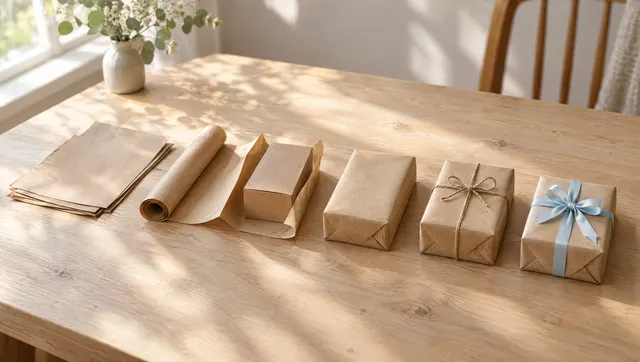
Short answer: custom order terms and conditions are a short set of rules you send with every order. They say what you will make, the price, the deposit and when the balance is due. They also say how approval and changes work, and what happens if the customer cancels. Send them before you take the deposit and ask the customer to agree in writing. Keep them in plain words, and never use them to take away rights the law gives your customer.
Most arguments about custom orders do not start with a bad customer. They start with a missing answer. The customer thought two changes were free, and you thought one was. The customer thought the deposit came back if they canceled, and you had already bought the fabric. Neither of you wrote it down, so now it is your word against theirs.
Terms fix this before it happens. This guide covers the ten clauses a custom order needs, with a template you can copy. It also explains the US and UK rules that limit what you can write. It is general information from a founder, not legal advice. If your orders are large or you sell across borders, ask a local lawyer to check your final version.
Why custom orders need their own terms
A shop that sells ready-made items can use a simple returns policy. The item goes back on the shelf. A custom order is different. You cannot resell a cake with a name on it, or a dress cut to one person’s size. So the money and the risk sit with you from the day you start work.
Most general templates online do not cover that. Most are written for websites or for service trades like plumbing. They cover site use, liability and privacy. They say very little about deposits, design approval, changes or cancellation once work has started. Those are the clauses a maker needs most.
Custom orders also run for days or weeks. In WISMO’s order data, the median order had 7 days between the day it was created and its due date.
7 days
That is a week in which the customer can change their mind, ask for one more change or go quiet. Your terms decide what happens in each case.
The 10 clauses to include
Each clause below answers one question. Write each answer in one or two sentences. Short terms get read, and long terms get skipped.
1. What you will make
Describe the item in the order confirmation: size, color, materials, quantity and any words or names on it. Add any reference photos the customer sent. Then say what can vary. Handmade work is never identical to a photo, and natural materials change from batch to batch. A line such as “colors may vary slightly from the photo” saves a lot of messages later.
2. Price and what it includes
Give the full price and say what it includes. Does it cover delivery, packaging, rush work or tax? If extras cost more, say how much or how you work them out. Our guide to pricing custom orders covers how to build the price itself.
3. Deposit and balance
Say how much the deposit is, what it covers and when the balance is due. “The balance is due before pickup” is clear. “The balance is due on completion” can mean different things to each of you.
There is no single right deposit. In WISMO’s data, the median seller takes about half, but individual sellers range from 8.0% to 97.4%. That comes from 91 deposits from 30 sellers. Set yours to cover what you would lose if the customer canceled. Our deposit guide shows how to work it out.
Median 50%
4. When work starts
Say what makes the order final. For most sellers it is two things together: the customer has approved the design, and the deposit has arrived. Until both happen, you have not reserved the date. This one sentence stops a common problem. The customer says yes, never pays, and then expects the order on the day.
5. Design approval
If you send a sketch, a sample or a mock-up, say that work starts only when the customer approves it in writing. A message saying “Yes, that is perfect” counts. After approval, the item is made to that design. Keep the approval message with the order, so you can find it if there is a question later.
6. Changes and revisions
Say how many rounds of changes are included, and when changes stop. For example, you might allow two rounds of changes before approval and no big changes after it. Then say what happens to a change after that point. It may cost more, or it may move the due date, or both. Many commission artists allow big changes only at the sketch stage, and small ones later. That pattern works for most custom work.
7. Due date and what can move it
Give the due date or the delivery window, and say what it depends on. A due date usually depends on the deposit, the approval and anything the customer must send, such as measurements or photos. If any of these arrives late, the date moves too. Say so in the terms.
In the US, the FTC’s mail order rule applies to goods that customers order online, by phone or by mail. The FTC’s business guide says you need a reasonable basis for any shipping time you state. If you state no time, you must have a reasonable basis to expect to ship within 30 days. If you cannot ship on time, the customer must be able to choose. They can agree to the delay, or cancel for a prompt refund. Our guide to handling a late order covers what to say.
8. Cancellation
This is the clause customers read most closely, so make it fair and clear. A good pattern is a scale that follows the work:
- Before work starts: a full refund, or a refund minus a small fee you name.
- After work starts: you keep the part of the deposit that covers materials bought and work done.
- When the item is finished: the customer pays the full price.
Also say what happens if you have to cancel. In most cases you refund everything the customer paid. A clause that only protects you looks unfair, and in some places it is.
Our guide to handling order cancellations shows how to set the refund for each stage, with a worked example.
9. Returns, faults and what “custom” means for refunds
Say that you do not accept returns for a change of mind on personalized items, if that is your policy. Then say what you will do if something is wrong: a repair, a remake or a refund. Give the customer a time limit to tell you. For example, use 48 hours after pickup for food, or 7 days for other items.
Do not write “all sales are final” in a way that seems to cover faulty work. In the UK, section 31 of the Consumer Rights Act 2015 says a term cannot remove the customer’s rights for goods that are faulty or not as described. In the US, the rules depend on your state. Either way, a fair fix for faults is easier to defend than “no refunds”.
10. Photos and the design
Say whether you may post photos of the finished work on your page or portfolio. Many customers are happy for you to post. Some are not, for example for a surprise gift or a private piece. Ask once, in the terms, and respect the answer.
If you create a design, also say what the customer may do with it. Can they print it on other products, or only keep the item? In the US, the person who creates a work usually owns its copyright. The U.S. Copyright Office’s Circular 30 explains the exception. A commissioned work only counts as a “work made for hire” in nine narrow categories. Examples are a translation or part of a film. It also needs a written agreement signed by both sides. So for most custom pieces, you own the design unless you agree otherwise in writing.
A template you can copy
Change the parts in brackets to fit your business. Delete the lines that do not apply. Keep it short enough to fit in one message.
Illustrative: custom order terms for a small maker
[Your business name]: custom order terms
- Your order. I will make the item described in your order confirmation. Handmade items can vary slightly from photos in color and detail.
- Price. The price in your confirmation includes [packaging / local delivery]. [Shipping / rush work] costs extra, and I will tell you the cost before you pay.
- Deposit and balance. A deposit of [amount or %] reserves your date and pays for materials. The balance is due [before pickup / before I ship / 3 days before the due date].
- When work starts. I start work when you have approved the design and paid the deposit. Until then, your date is not reserved.
- Approval. I will send you [a sketch / a sample / a photo]. Please reply in writing to approve it. I make the item to the approved design.
- Changes. [Two] rounds of changes are included before you approve. After approval, changes may cost extra or move the due date. I will tell you before I make them.
- Due date. Your due date depends on the deposit, your approval and [measurements / photos] arriving on time. If any of these is late, the date may move.
- Cancellation. If you cancel before work starts, I refund your deposit [minus a fee of amount]. If you cancel after work starts, I keep the part of the deposit that covers materials and work done. I refund the rest. If I have to cancel, I refund everything you paid.
- Problems. I do not accept returns for a change of mind on personalized items. If something is wrong, please tell me within [48 hours / 7 days] with a photo. I will repair it, remake it or refund you.
- Photos. I may share photos of the finished item on my page. Please tell me if you would prefer that I do not.
By paying the deposit, you agree to these terms.
This template is an example, not legal advice. Laws differ between US states and between countries. Check the rules where you and your customers live before you rely on it.
Get the customer to agree, and keep the proof
Terms only help if the customer saw them before paying. So send them with the written order confirmation, before the deposit. If you take orders through messages, paste the terms into the chat. Or send a link to a page with the terms, and put the key numbers for the order in the message.
Then ask for a clear yes. “Please reply ‘I agree’ and send the deposit” is enough for most small orders. Save the reply with the order.
This matters most when a customer pays by card. Card payments can be disputed with the bank. Stripe’s guidance for businesses says to describe your refund and cancellation policy clearly in your terms. It also says to ask customers to agree to them. That makes card issuers more likely to respect your policy in a dispute. Stripe warns that a checkbox with only a link may not count. The issuer wants reasonable evidence that the customer saw the full policy before paying. A message thread with the terms and the customer’s “I agree” is that kind of evidence.
There is a US legal reason to write things down too. Most US states follow the Uniform Commercial Code for sales of goods. Under section 2-201, a sale of goods for $500 or more usually needs a signed writing to be enforced. There is an exception for goods “specially manufactured for the buyer” once the seller has made a substantial start. But you do not want to rely on the exception. A written confirmation is much simpler to point to.
What you cannot put in your terms
Terms are a promise between you and your customer. They do not override the law. Three rules matter most for small sellers.
You cannot always remove rights for faulty work. In the UK, a “no refunds” line does not cover goods that are faulty or not as described. Write a fair fix for problems instead.
You may not be able to keep more than your real loss. In the UK, regulators look closely at deposits that are kept in full whatever happens. Our deposit guide quotes the UK guidance in detail. In the US, the rules vary by state, so check the rules in yours.
Some customers have a legal right to cancel. In the US, the FTC’s Cooling-Off Rule covers some sales made at the buyer’s home. It also covers sales at a temporary place, such as a hotel or fairground. The buyer can cancel until midnight of the third business day. The rule has a few exceptions. It does not cover sales made entirely online, by mail or by phone. It also does not cover arts or crafts sold at fairs, malls, civic centers or schools. So if you take custom orders in a customer’s home, read the FTC’s page first.
In the UK, online and phone customers usually get 14 days to cancel. But this right has exceptions, listed in regulation 28 of the Consumer Contracts Regulations 2013. One is “goods that are made to the consumer’s specifications or are clearly personalised”. A dress cut to one customer’s measurements is a clear example.
Common mistakes
- Sending them after the deposit. Terms that appear after payment look like a trap, and they are harder to rely on.
- Different terms for each customer. Use one set for everyone. Put the details that change, like price and date, in the order confirmation.
- Copying another business’s terms. Their deposit, their timeline and their trade are not yours. Use a template as a start, then write your own numbers.
- Not recording what was agreed. The terms are only half the story. You also need the price, the deposit paid and the balance for each order.
That last one is common. In WISMO’s data, 48 of the 67 part-paid orders were past their due date with a balance still owed. Clear terms say when the balance is due. A record of each order tells you who still owes you. If a balance is already late, our guide on what to do when a customer won’t pay has the reminder messages.
48 of 67
How WISMO helps you keep to your terms
You can do all of this with a notebook and your chat app. WISMO is one way to keep the record on your phone.
Each order in WISMO has a price, a due date and its payments. You can record a deposit, part-payments and the final payment, and WISMO shows what is still owed. You can keep private notes on the order, such as the date the customer approved the design. Your customer does not see these.
Each order also has a tracking link. Your customer opens it in any browser, with no app and no signup. It shows the order’s stage, its payment status and any updates you add. So when you write “Design approved, work has started”, your customer sees the same record you do. You can also make and email an invoice from the order. The link, payments, notes and invoices are free.
WISMO does not take payments or host your terms. You still send the terms and collect the money yourself. Your first 30 orders are free. WISMO Pro is $9.99 a month or $99.99 a year, and you can try Pro free for 7 days.
For the wider process around your terms, see the made-to-order business guide.
Common questions
What should custom order terms and conditions include?
At least ten things: what you will make, the price, the deposit and when the balance is due, when work starts, how design approval works, how many changes are included, the due date and what can move it, cancellation, returns and faults, and photos of the finished work. Each one answers a question that otherwise turns into an argument later.
Do I need a lawyer to write terms for custom orders?
Not to start. A short, clear set of terms that you send with every order is far better than none. If you take large orders, sell across borders or work with businesses, ask a lawyer in your state or country to review your final version. This guide is general information, not legal advice.
Can I say that custom orders are non-refundable?
You can say that you do not accept returns for a change of mind on personalized work. In the UK, the 14-day cancellation right for distance sales does not apply to goods made to the customer's specifications. But in the UK, no wording removes the customer's rights if the goods are faulty or not as described. In the US, the rules depend on your state. A deposit you keep should also match your real costs.
How do I get a customer to agree to my terms?
Send the terms with the written order confirmation, before you take the deposit. Ask the customer to reply "I agree", or to pay the deposit after reading them. Keep that message. Stripe's own guidance says that showing customers your full policy before they pay helps when a card payment is disputed.
Who owns the design of a custom order?
In the US, the person who creates a work usually owns the copyright, even when a customer pays for it. A commissioned piece only counts as a "work made for hire" in nine narrow categories, and only with a written agreement signed by both sides. So say in your terms what the customer may do with the design, and whether you may post photos of it.
Where should I put my terms if I take orders through messages?
Keep one copy as a page or a pinned note you can link to. Then paste a short version into each order confirmation, with the price, deposit, balance and due date for that order. The customer sees the terms in the same chat where they agree to the order, so nothing is hidden.
Sources
- Stripe Docs: Best practices for preventing fraud and disputes (checked October 2026)
- FTC: Business Guide to the Mail, Internet, or Telephone Order Merchandise Rule (checked October 2026)
- FTC Consumer Advice: Buyer's Remorse, the FTC's Cooling-Off Rule May Help (September 2025)
- U.S. Copyright Office: Circular 30, Works Made for Hire
- Cornell Law School LII: Uniform Commercial Code § 2-201, Formal requirements (checked October 2026)
- legislation.gov.uk: Consumer Contracts Regulations 2013, regulation 28 (checked October 2026)
- legislation.gov.uk: Consumer Rights Act 2015, section 31 (checked October 2026)
- WISMO order data: 731 orders from 155 sellers, March–October 2026
About the author
Ashish Vijay is the founder of WISMO, an order management app for small sellers and independent makers. He builds the product, talks to the sellers who use it, and writes these guides from what that work turns up.