Made a Mistake on a Customer's Order? What to Do Next
Made a mistake on a customer's order? Tell them first, offer a fix, a remake or a refund, and know the US and UK rules. With messages you can copy.
10 min read
Short answer: tell the customer before they find the mistake, if you can. Say sorry and name the mistake in plain words. Then offer a clear fix: correct the item, remake it, or refund part or all of the price. Give a date for the fix that you are sure you can keep, and let the customer choose. A “no refunds on custom orders” rule does not cover your own mistake.
Every seller who makes things to order gets one wrong sometimes. You spell a name “Kaitlyn” when the order said “Katelyn”. You hem the trousers an inch too short. You put the blue ribbon on the order that asked for gold. You send two parcels to the wrong addresses. The busy weeks before the holidays make all of these more likely.
The mistake itself is rarely what loses the customer. What loses them is a slow, defensive or confusing answer. This guide shows what to do in the first hour. It shows how to choose between a fix, a remake and a refund, and what to write. It also covers the rules in the US and the UK, and how to stop the same mistake next time.
1. Check what went wrong before you reply
Take ten minutes before you answer. Open the order and the chat, and find what the customer asked for in writing. Then decide which of these it is.
- Your mistake. The written order says one thing, and you made another. A wrong name, size, color, flavor or item belongs here. So does a parcel sent to the wrong address.
- The customer’s mistake. You made exactly what they wrote or approved, but they wrote it wrong. An example is a typo in an approved proof.
- A shared gap. The order was not clear. The customer said “navy” and you heard “royal blue”, and nobody wrote down which.
- A matter of taste. The item matches the order, but the customer does not like it as much as they hoped.
This matters because each one has a different fair answer. A mistake that is yours needs a fix at your cost. A matter of taste usually does not, although a kind answer still helps. Be honest with yourself here. If the order was unclear, treat it as at least half yours.
Look at the item too. Is it a mistake you can correct, such as a hem you can let down? Or is it one you cannot, such as a wrong name engraved on metal? That decides which fixes you can offer.
2. Tell the customer first, and fast
If you find the mistake before the customer does, tell them straight away. Do not hope they will not notice. A personalized gift will be read closely, often by the person it is for.
A message from you before delivery feels like care. The same news, found by the customer at the party, feels like a cover-up. It also leaves them no time to plan.
If the customer finds it first, reply the same day. A short reply that says sorry and gives a time is enough to start. “I am so sorry. I am checking the order now and will message you by 6 p.m. with a fix.” Then keep that promise.
3. Pick the fix
Most mistakes have four possible fixes. Choose the one that gives the customer what they paid for, in time for when they need it.
| Fix | When it fits | What it costs you |
|---|---|---|
| Correct the item | The mistake can be undone well: a hem, a repaint, a missing part | Your time, and perhaps a second delivery |
| Remake it | The item cannot be corrected, and there is still time before the date | New materials, your time, and delivery again |
| Partial refund | A small mistake that the customer is happy to keep | Part of the price |
| Full refund | The date has passed, a remake would be too late, or the customer has lost trust | The whole price, plus the materials you already used |
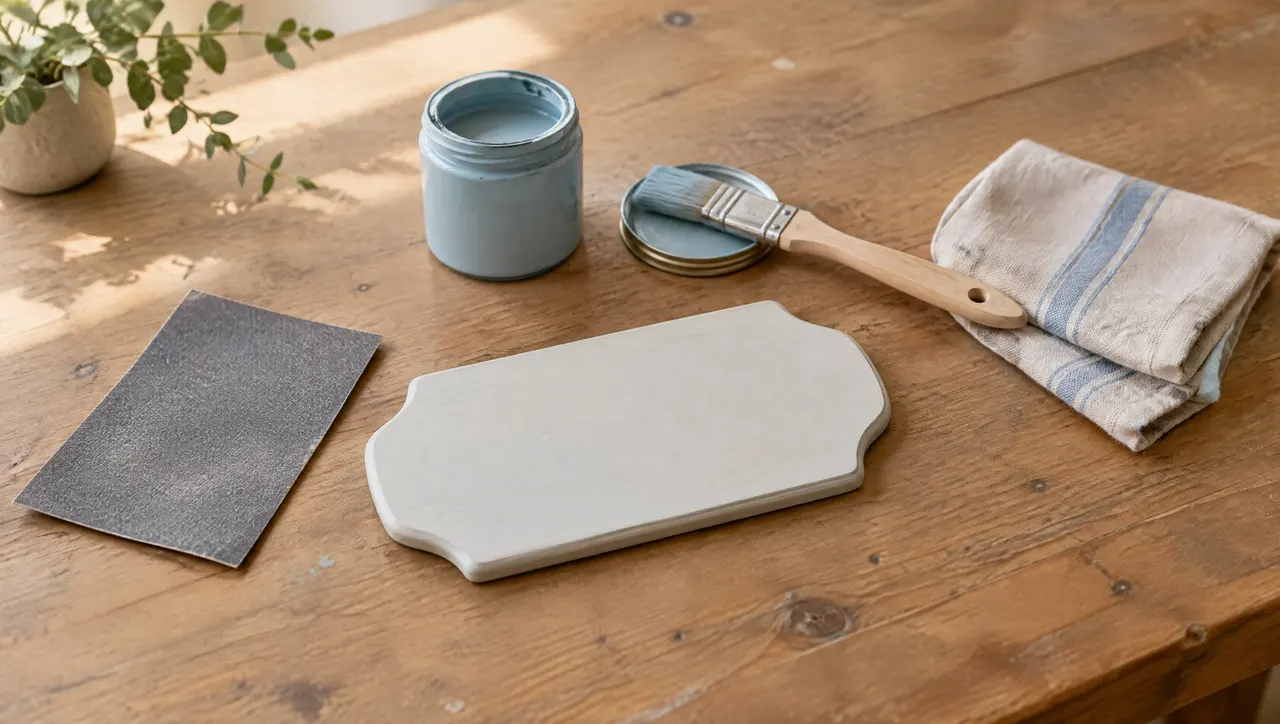
Do the math before you offer. Here is an illustrative example. A customer orders a painted wooden name sign for $120 for a baby shower in nine days. You spell the baby’s name wrong. Materials were $25 and the sign took three hours.
- Correct it. Sanding and repainting one word takes about an hour and $5 of paint. This is the cheapest choice, if the finish will look as good as new.
- Remake it. That costs another $25 and three hours, plus $12 to ship again. It is fair if there is time, and you can do it in time for the shower.
- Partial refund. The customer may still want to use the sign, perhaps for a photo. Then a refund of $40 may feel fair.
- Full refund. You return $120, and the $25 of materials is lost. Choose this if the shower date cannot be met.
Offer one or two choices that you can really deliver. Then let the customer pick. Most customers choose the remake when the date is clear and they trust it.
Should you add something extra? Only if the mistake cost the customer something real. Examples are a missed event, a second trip to pick up, or a rush delivery they paid for. In those cases, free delivery or a small refund on top is fair. A small mistake that you fix quickly usually needs a good apology and nothing more. Extra gifts never make up for a slow or unclear answer.
4. Write the message
A good message about a mistake is short. It does five things, in this order:
- Say sorry once, plainly.
- Name the exact mistake. “I spelled Katelyn’s name wrong”, not “there was an issue with your order”.
- Say what you will do and by when.
- Give the customer a choice.
- Do not explain at length or blame anyone else.
Here are four messages you can adapt. They are illustrative examples, not messages from a real seller.
Illustrative: you found the mistake before delivery
Hi Jenna, I am so sorry. I checked your sign before packing it, and I spelled Katelyn’s name wrong. I am making a new one now. It will be ready on Thursday, November 12, two days before the shower. If you would rather have a full refund, please tell me and I will send it today.
Illustrative: the customer found it
Hi Marcus, thank you for the photo, and I am very sorry. You asked for a 32-inch inseam and I hemmed the trousers at 31. There is enough fabric to let the hem down. Please bring them in any day this week, and I will fix them while you wait. If that is hard for you, I can pick them up from your home.
Illustrative: there is no time for a remake
Hi Priya, I am so sorry. Your cake has the gold ribbon instead of the blue one you asked for. I cannot remake it before your party at 3 p.m. today. I have refunded $25 to your card. If you would like, I can also change the ribbon before you pick it up at noon. Please tell me which you prefer.
Illustrative: two orders were mixed up
Hi Tom, I am sorry. I put the wrong labels on two parcels yesterday, so you received another customer’s order. I have sent your order by express today, at no cost to you. Here is the tracking number: [number]. I have also sent you a prepaid label for the other parcel. Please leave it closed and drop it at any post office.
For your other order messages, such as confirmations and ready-for-pickup notes, see our WhatsApp order message templates. They work in Instagram DMs, text messages and email too.
5. Know the rules where you sell
A mistake is not only about manners. In many places the law says what a buyer can ask for. This section is general information, not legal advice. Check the rules where you and your customers live.
In the US. The FTC’s guide to warranty law describes implied warranties. These are unwritten promises created by state law. The main one is the implied warranty of merchantability. The FTC calls it a basic promise that goods “will do what they are supposed to do.” Merchants make it automatically every time they sell. Most states let you sell “as is” if you tell the customer clearly, usually in writing. Some states do not allow that for consumer goods.
In the UK. Section 11 of the Consumer Rights Act 2015 says goods must match the description you agreed. It has no exception for personalized goods. Regulation 28 of the Consumer Contracts Regulations 2013 does make an exception for them, but only from the rules on cancelling. That covers a change of mind. It does not cover a mistake. When goods do not match, the customer can ask for a repair or a replacement first. Section 23 says you must do it within a reasonable time and without significant inconvenience to them. You also pay the costs, including labor, materials and postage. If the repair or replacement fails, section 24 gives the customer a price reduction or a final right to reject.
Card disputes. A customer who paid by card can also go to their bank. Visa, Mastercard and American Express all have dispute reasons for goods that are not as described or are defective. Stripe lists these in its guide to dispute reason codes. In the US, the FTC says a card holder can take a quality problem to the card issuer. They must try to settle it with the seller first.
The practical lesson is the same everywhere. A fast, fair fix costs less than a dispute. It also keeps the customer. Keep the written order, the chat and photos of the item before it left you. You will need them if a dispute happens.
If the mistake means the customer wants to cancel, our guide to order cancellations covers refunds by stage and card fees.
6. When the mistake is the customer’s
Sometimes you made exactly what the customer wrote. They typed the wrong date, or approved a proof with a typo. Check the written order or the approval first. Then answer kindly.
- Show, do not argue. Send a screenshot of their message or the approved proof. Say it plainly and without blame: “This is the name in your order, so I used this spelling.”
- Offer a fair way out. Offer a remake at your cost price, or at a discount. A customer who feels blamed for a small typo rarely orders again.
- Keep the deal you wrote down. If your terms say you make items exactly as approved, you can hold to that. But you can still choose to be generous.
Our guide to proof approval explains how to get a clear written yes before you make anything. Your custom order terms are the place to say who pays for what.
7. Why a good fix is worth it
A customer who gets a quick, fair fix often comes back. That matters, because repeat customers are a large part of a small seller’s orders.
22% of orders
In WISMO’s order data, 8.0% of customers placed more than one order. Those customers placed 22% of all orders. Most sellers in that data joined recently, so the share can change as the data grows. The point still stands. A customer you keep can be worth many more orders than the one that went wrong. Our guide to following up with past customers shows how to bring them back.
8. Stop the same mistake next time
One mistake is bad luck. The same mistake twice is a sign that a step is missing. These habits catch most of them:
- Copy, do not retype. Paste names, dates and sizes from the customer’s own message into the order. Retyping is where most spelling mistakes start.
- Read it back. Before you start, send the key details back to the customer and ask for a yes. For personal text, send a proof.
- Check against the order, not your memory. Before you pack, read the order once more with the item in front of you.
- One label per order. Pack one order at a time, and label it before you start the next one. This stops mixed-up parcels.
- Write down every mistake. Note what went wrong and why. After a few months, you will see a pattern, such as one tired evening each week or one kind of order.
- Slow down in busy weeks. Most mistakes happen when you are rushed. Set a holiday cut-off date and limit how many orders you take.
Sometimes a mistake means the order will now be late. Our guide to late orders shows how to pick a new date.
How WISMO helps you avoid and fix mistakes
You can do all of this with a notebook and your messages. WISMO is one way to keep each order’s details in one place on your phone.
Each order keeps the customer, the items, the details, the price, payments and the due date together. Paste the customer’s exact words into the description, so you check against their words and not your memory. Keep private notes on the order, such as “Proof v2 approved” or “Hem fixed on November 12”. Your customer does not see these.
Each order also has a tracking link. Your customer opens it in any browser, with no app and no signup. When you fix a mistake, change the due date if it moved. You can also add a note that your customer sees, such as “New sign is being painted. Ready Thursday.” The link and the notes are free. On WISMO Pro, you can add a photo of the corrected item to an update. Your customer also gets an email when the order moves to a new stage.
WISMO does not take payments or issue refunds. You still refund the customer through the way they paid you. WISMO also does not send WhatsApp or text messages for you, so you still send the apology yourself.
Your first 30 orders are free. WISMO Pro is $9.99 a month. You can try Pro free for 7 days.
Common questions
What should I do if I made a mistake on a customer's order?
Tell the customer before they find it, if you can. Say sorry and name the mistake in plain words. Then offer a clear fix: correct the item, remake it, or refund part or all of the price. Let the customer choose when you can, and give a date for the fix that you are sure you can keep.
Should I remake a custom order or give a refund?
Remake it when you can finish it before the customer needs it and the item is still worth having. Refund it when the date has passed, when a remake would arrive too late, or when the customer has lost trust. A partial refund fits a small mistake that the customer is happy to keep. Ask the customer which they prefer.
Do I have to refund a custom order if I made a mistake?
Often yes, or you must at least put it right. In the UK, goods must match the description you agreed, even when they are personalized, and the customer can ask for a repair or replacement first. In the US, state law gives an implied promise that goods do what they should. A "no refunds on custom orders" line covers a change of mind, not your own mistake. This is general information, not legal advice.
How do I apologize to a customer for a wrong order?
Keep it short. Say sorry once, name the exact mistake, and say what you will do and by when. Do not explain at length, and do not blame a supplier or the customer. End with a choice, such as a remake by a set date or a refund, so the customer feels in control.
What if the mistake was the customer's, not mine?
Check the written order or the approved proof first. If the customer gave you the wrong name or size in writing, show them the message kindly. Then offer to remake it at a fair price, or at cost. Being fair here often keeps a customer who would otherwise leave a bad review.
Can a customer dispute the charge if I got their order wrong?
Yes. Card networks have dispute reasons for goods that are not as described or are defective. In the US, the FTC says a card holder can raise a quality problem with the card issuer after trying to settle it with the seller. A quick, fair fix is the best way to avoid a dispute. Keep the order details and your messages in case one happens.
Sources
- FTC: Businessperson's Guide to Federal Warranty Law (checked November 2026)
- FTC Consumer Advice: Using Credit Cards and Disputing Charges (checked November 2026)
- legislation.gov.uk: Consumer Rights Act 2015, section 11, Goods to be as described (checked November 2026)
- legislation.gov.uk: Consumer Rights Act 2015, section 23, Repair or replacement (checked November 2026)
- legislation.gov.uk: Consumer Rights Act 2015, section 24, Price reduction or final right to reject (checked November 2026)
- legislation.gov.uk: Consumer Contracts Regulations 2013, regulation 28 (checked November 2026)
- Stripe Docs: Dispute reason codes (checked November 2026)
- WISMO order data: 1,386 orders from 257 sellers, March–November 2026
About the author
Ashish Vijay is the founder of WISMO, an order management app for small sellers and independent makers. He builds the product, talks to the sellers who use it, and writes these guides from what that work turns up.