How to Offer Layaway and Payment Plans on Custom Orders
How to offer layaway or a payment plan on custom orders: which orders qualify, a schedule that ends before the due date, written terms and state rules.
9 min read
Short answer: to offer layaway on a custom order, ask for a first payment that covers your materials. Split the rest into equal payments, and make the last one due at least a week before the due date. Write the terms down and give the customer a copy. Hand over the item only when it is paid in full. Payment plans are already part of small orders. On WISMO, 90 of 792 priced orders with a payment were paid in more than one installment. That is from 257 sellers, March to November 2026.
In November, the question comes more often. A customer loves the custom quilt, the hand-painted portrait or the made-to-measure dress. Then they ask, “Can I pay for it in parts?”
Saying yes can win the order. Many people now expect to pay over time. In the Federal Reserve’s survey of US adults for 2025, 16% had used buy now, pay later in the past year. But a payment plan on a custom order carries a risk that a shop with stock does not have. If the customer stops paying, you cannot put a custom piece back on the shelf and sell it to someone else.
This guide shows you how to set up a payment plan that protects you. It covers which orders qualify, how to build the schedule, what to write down and which state rules to check. The examples use US dollars and US law. The method works anywhere.
Layaway, deposit or buy now, pay later
These three are often mixed up. They put the risk in different places.
| Deposit and balance | Layaway or payment plan | Buy now, pay later | |
|---|---|---|---|
| How the customer pays | Part up front, the rest when it is ready | Three or more payments on a schedule | Several payments to a finance company |
| When you get the money | In two parts | In parts, over weeks or months | All at once, minus a fee |
| Who carries the risk of non-payment | You, for the balance | You, for every payment after the first | The provider |
| When the customer gets the item | When the balance is paid | After the last payment | Right away, or when it is ready |
| Best for | Most custom orders | Larger orders with a long lead time | Sellers who already take cards online |
A deposit is the most common choice for custom work. In WISMO’s data, the median first deposit was 50% of the order price (169 orders from 45 sellers). Our guide to how much deposit to take covers it in detail.
Buy now, pay later comes from a provider such as Afterpay or Klarna. On Square Online in the US, for example, Square says you get paid the full amount right away. The customer pays Afterpay in four installments over six weeks, for orders between $1 and $2,000 by default. You pay a fee on each sale. This works if you already take card payments online.
Layaway, or a payment plan you run yourself, is for the rest. It suits a customer who wants to pay over time but cannot or will not use a finance company. The rest of this guide is about that kind of plan.
1. Decide which orders qualify
Do not offer a payment plan on every order. Set two simple rules and write them down.
A minimum price. A plan takes work to track. On a $40 order, a plan is not worth the reminders. Pick a level that fits your prices, for example $200.
A minimum lead time. A plan needs time to run. If an order is due in a week, there is no room for three payments. Most small orders are short.
7 days
In our data, half of all orders were due within 7 days of being taken. Only one order in ten ran 21 days or longer. So a payment plan fits a small share of your orders: the big pieces with a long wait. A good rule is “orders over $200, due four weeks or more from today”.
2. Make the first payment cover your materials
A shop that holds stock can wait for the money. You cannot. You buy fabric, wood, silver or paint for one customer, and nobody else wants that exact piece.
So ask for a first payment that covers at least your materials before you start. Do not buy anything until it arrives. If your materials cost $150 on a $600 order, a first payment of $200 protects you.
There are two ways to run the plan after that:
- Pay first, then make. You start work only when the plan is paid in full, or nearly. This is the safest choice. It needs the longest lead time.
- Make while they pay. You start work after the first payment and finish while the payments come in. This is faster for the customer. You carry more risk, because your time goes in before the money does.
For a new customer, choose “pay first, then make” when the date allows it. For a regular customer you trust, “make while they pay” is usually fine.
3. Build a schedule that ends before the due date
Split the rest of the price into equal payments. Then work backward from the due date. The last payment should arrive at least one week before the due date. That week gives you room to finish the order and to chase a late payment without a crisis.
Weekly, every two weeks or monthly all work. Every two weeks is a good default. It is often how people get paid, and it keeps the plan short.
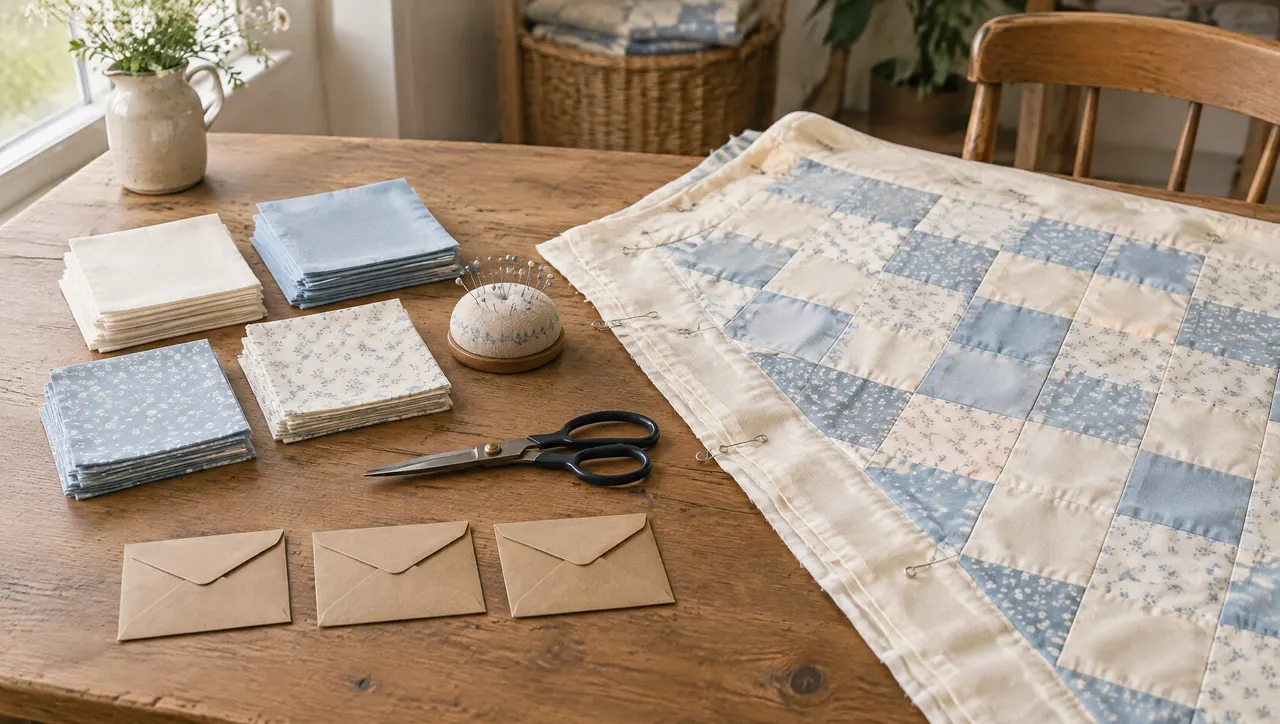
A payment plan for a $600 custom quilt (illustrative)
Order taken: Monday, November 9. Due: Saturday, December 19.
- November 9: first payment, $200. Covers the fabric. Work starts when it arrives.
- November 23: second payment, $200.
- December 7: final payment, $200.
- December 12: quilt finished.
- December 19 or earlier: pickup or shipping, after the final payment.
The last payment is 12 days before the due date. If it is late, there is still time to send a reminder.
Do not let the plan end on the due date itself. In our data, 101 orders were part-paid. Of those, 68 were past their due date with a balance still owed. A plan that ends on the due date is how a balance turns into one of those.
If the order must ship for the holidays, work back from your carrier’s last safe ship date, not from December 25. Our guide to holiday order cut-off dates shows how.
4. Hand over the item only when it is paid in full
This is the rule that makes layaway work. The customer gets the item after the last payment, and never before it.
It feels awkward to say no to a nice customer who is “only $100 short”. But a balance is much harder to collect once the item is in their hands. Keep the item until the plan is paid. Tell the customer this rule at the start, so it is not a surprise at pickup.
90 of 792
Split payments are not rare. That is about 9% of the priced orders with a payment in our data. Each of those is a balance someone had to remember to ask for.
5. Write the terms down
Every plan needs written terms, even with a friend. A short message or a one-page agreement is enough. The customer should get a copy before the first payment.
New York’s layaway law gives a good checklist, even if you sell somewhere else. Before it takes a layaway payment, a seller in New York must give the customer, in writing:
- A description of the item.
- The total cost, with tax and delivery.
- Any service, carrying or cancellation fee. In New York, a fee you did not disclose cannot be charged.
- How long the plan lasts.
- The payment schedule, and what happens if a payment is missed.
- Your refund policy for payments already made.
For a custom order, add two more things. Say what you will make, with the details you agreed. And say when you will start work.
Payment plan terms you can copy (illustrative)
Payment plan for your custom quilt
Item: queen-size quilt, blue and cream, pattern as agreed on November 8. Total price: $600, including delivery. No extra fees.
Payments:
- $200 on November 9. I start work when this arrives.
- $200 on November 23.
- $200 on December 7.
Your quilt will be ready on December 12. I will ship it after the final payment.
If a payment is late, I will send you a reminder. If a payment is more than 14 days late, I will contact you to agree a new date or cancel.
If you cancel: I will refund what you paid, minus the cost of fabric already bought for you.
Please reply “I agree” to confirm.
Check the cancellation line against your state’s rules (next step). Some states limit what you can keep. If you are not sure, keep the sentence simple and fair.
Our guide to custom order terms and conditions has a longer template for all your orders.
6. Check your state’s layaway rules
There is no single US layaway law. Some states have their own rules, and they differ a lot. Here are three examples, from the states’ own law and attorney general pages:
| Ohio | New York | District of Columbia | |
|---|---|---|---|
| Written terms | Required over $500, given at the first payment | Required before the first payment, for purchases over $50 in four or more payments | Required before the agreement starts |
| If the customer cancels early | Over $500: full refund if they cancel within 5 days | Your written refund policy applies | Full refund within 2 weeks |
| What you may keep later | Over $500: up to 50% of what they paid. $500 or less, after a missed payment: $25 or 10% of the value, whichever is less | Only fees you disclosed in writing | 8% of the price or $16, whichever is less |
| Missed payments | $500 or less: written notice, then 10 days to catch up | Your written terms apply | After notice and 14 days unpaid, you may cancel, keep up to $1 and refund the rest |
Look at what that means for a custom order. In the District of Columbia, a seller may keep at most $16 when a customer cancels after two weeks. That is far less than the materials in a $600 quilt. So in some places, a “make while they pay” plan may not protect you at all.
These laws were mostly written for shops that set aside goods from stock. It is not always clear how they apply to an item you make to order. If you are not sure, ask your state attorney general’s consumer protection office before you start offering plans.
7. Track every payment and remind before it is due
A payment plan fails quietly. Nobody forgets a big deposit. People forget the third $200 payment on a Tuesday in December.
Keep each payment next to the order it belongs to: the date, the amount and the method. Then you can answer “how much do I still owe?” in one look, and so can your customer.
Send a short reminder a day or two before each payment is due. Be friendly and specific.
A payment reminder (illustrative)
Hi Maria, a quick reminder that your next quilt payment of $200 is due on Monday, November 23. After that, $200 is left, due December 7. Thank you, and please message me if you have any questions.
Late payments are normal. In the Federal Reserve’s survey, 26% of adults who used buy now, pay later made at least one payment late. Plan for it. Your one-week gap before the due date is there for exactly this.
Is a payment very late? Our guide to what to do when a customer won’t pay the balance has the next messages.
When not to offer a payment plan
A payment plan is not right for every seller or every order. Skip it when:
- The order is due soon. With less than three or four weeks, a deposit and balance is simpler.
- Your materials are expensive and cannot be reused. If you cannot afford to lose them, ask for more up front, or wait for full payment.
- Your state’s rules would leave you unprotected. If you could keep only a few dollars on cancellation, a deposit order may be safer than a layaway plan.
- You cannot keep track. If plans would live in your memory and a chat thread, wait until you have one place for every payment.
If you say no, say it kindly. “I take a 50% deposit to start, and the rest when it is ready” is a clear and fair answer.
How WISMO helps you track payment plans
WISMO does not take payments or run a payment plan for you. Your customer still pays you by Zelle, Venmo, card or cash. WISMO keeps the record.
- Every payment on the order. An order can hold many payments, each with its amount and method. The order shows Unpaid, Partly paid or Paid, and you can see what is still owed.
- A due date on every order, with reminders before it is due, so the final payment and the finish date stay in view.
- A reminder about unpaid orders sent to you once a day at 1 pm, in your own timezone. You can turn it off in settings.
- An invoice for any order, which you can share as a clear record of the plan. See our custom order invoice guide.
- A tracking link your customer can open to see the order’s progress and payment status, without messaging you.
Payments, invoices and reminders are free on every plan. Your first 30 orders are free. WISMO Pro is $9.99 a month, and you can try Pro free for 7 days. See customer payment tracking for how it works.
Common questions
How do I offer layaway as a small business?
Decide which orders qualify, for example orders over a set price that are due at least four weeks away. Ask for a first payment, split the rest into equal payments, and make the last one due a week before the due date. Write the terms down and give the customer a copy. Hand over the item only when it is paid in full.
What is the difference between layaway and a deposit?
With a deposit, the customer pays part of the price up front and the rest when the order is ready. With layaway, the customer pays in several smaller payments on a schedule, and gets the item after the last one. A deposit is one payment before and one after. Layaway is a plan of three or more payments.
Can I offer layaway on custom-made items?
Yes, but plan it differently from a shop that holds stock. You cannot put a custom item back on a shelf if the customer stops paying. So make the first payment cover your materials, start work only after it arrives, and set clear cancellation terms. Check your state's layaway rules first, because some limit the fees you can keep.
Do I need a written layaway agreement?
It is always a good idea, and some states require one. New York requires written terms before you take a layaway payment on a purchase over $50 in four or more payments. Ohio requires a written contract for layaway over $500. The District of Columbia requires a written disclosure before the agreement starts.
Should I charge a fee for layaway?
Many shops charge a small service fee, but state law may limit it. In the District of Columbia, a seller may keep at most 8% of the price or $16, whichever is less, when a customer cancels after two weeks. In New York, you cannot charge a fee that you did not disclose in writing. Check your state's rules before you add any fee.
What happens if a layaway customer stops paying?
Follow the terms you wrote down. Send a reminder, then a written notice with a new date. Some states set this step for you: in Ohio, for layaway of $500 or less, the customer gets 10 days after a written notice to catch up. If they still do not pay, refund what your terms and your state's law require, minus any fee you are allowed to keep.
Sources
- Federal Reserve: Economic Well-Being of U.S. Households in 2025 (May 2026, checked November 2026)
- Ohio Attorney General: Layaway Arrangements (checked November 2026)
- New York State Senate: General Business Law § 396-t, Layaway plans (checked November 2026)
- Council of the District of Columbia: D.C. Code § 28-3818, Layaway plans (checked November 2026)
- Ohio Attorney General: Layaway Plans, What to Consider This Holiday Season (December 2014, checked November 2026)
- Square Support: Accept Payments with Afterpay on Square Online (US, checked November 2026)
- WISMO order data: 1,386 orders from 257 sellers, March–November 2026
About the author
Ashish Vijay is the founder of WISMO, an order management app for small sellers and independent makers. He builds the product, talks to the sellers who use it, and writes these guides from what that work turns up.