Guides
Gift Certificates for Custom Orders: How to Sell and Track Them
How to sell gift certificates for custom orders: pick an amount, write clear terms, follow the US expiry rules, and track every code until it is used.
9 min read
Short answer: a gift certificate for a custom order is a prepaid voucher. The buyer pays you now and gives it as a gift. Later, the person who gets it tells you what they want, and you make it then. To sell one well, sell a set amount (for example $75) rather than a fixed item. Write the terms on the certificate and give it a unique code. Keep a list of every code until it is used. In the US, most gift certificates cannot expire sooner than five years after you sell them. Some states, such as California, do not allow an expiry date at all.
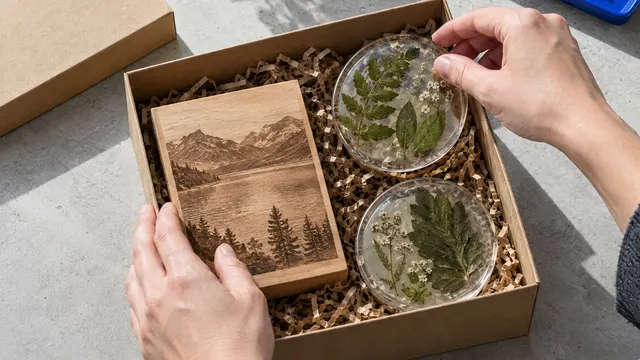
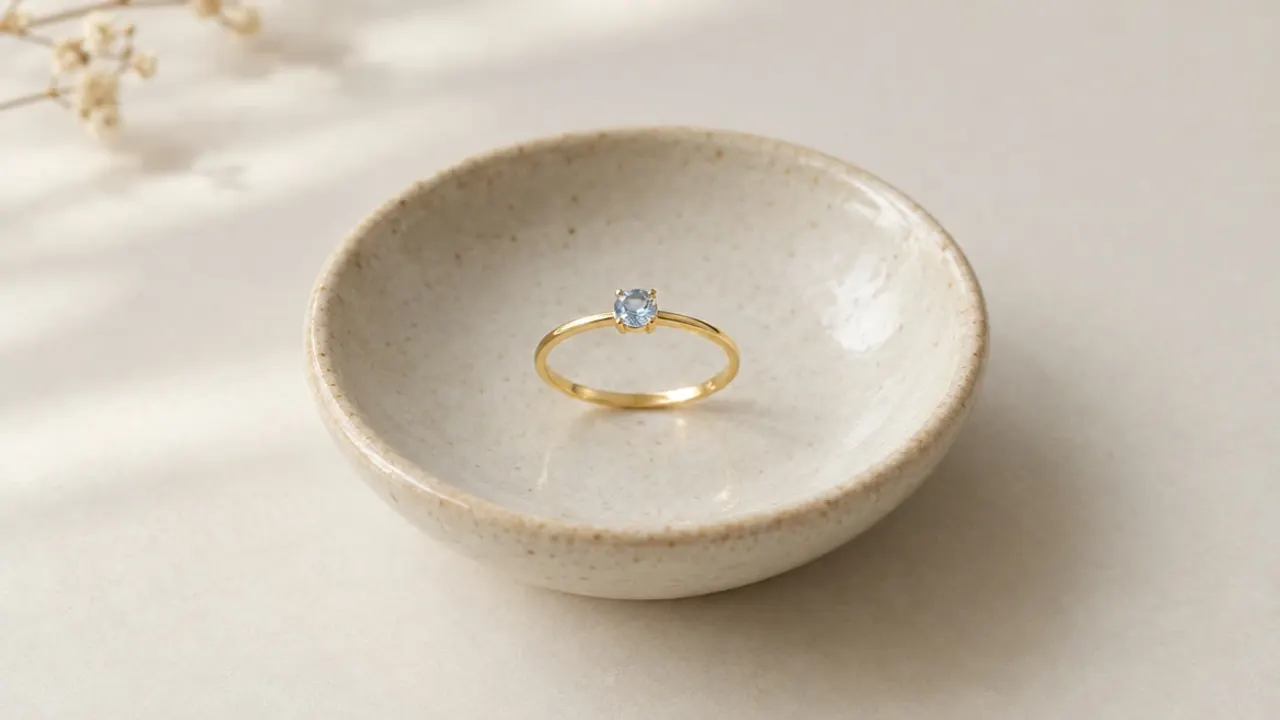
Custom work is hard to give as a gift. A portrait needs a photo. A cake needs a date and a flavor. A ring needs a size. A tailored jacket needs measurements. The buyer often cannot get these without spoiling the surprise.
A gift certificate fixes this. The buyer pays and gives a card. The person who receives it chooses the details later. For you, it means money now and work in a quieter month. This guide shows how to set one up and what to write on it. It explains the rules on expiry. It also shows how to track each certificate until it turns into an order.
This guide gives general information, not legal advice. Gift certificate rules depend on your state or country, so check your local rules before you sell.
1. Know why it works for custom work
A gift certificate solves three problems that custom sellers have every December.
- The details are a secret. The buyer does not need to know the recipient’s ring size or favorite colors. The recipient tells you later.
- Your holiday calendar is full. You can sell a certificate after your holiday order cut-off date. You make the piece in January, not in the last week of December.
- Shipping is not a risk. An emailed certificate arrives in seconds. The buyer can print it and put it in a card.
It also brings in money at a time when many buyers are ready to spend. But that money is not really yours yet. You still owe the work. Keep that in mind when you plan your January and your cash.
2. Choose an amount or a specific piece
There are two ways to sell a certificate for custom work. Each has a place.
| A set amount | A specific piece | |
|---|---|---|
| Example | $75 toward any custom order | One 8x10 pet portrait, one pet, plain background |
| If your prices go up | Still fair. The recipient pays the difference | You make the piece for the old price |
| If the recipient wants more | Easy. They pay the extra | You need a rule for extras |
| What the buyer likes | Choice for the recipient | A clear gift they can describe |
| Best for | Most custom sellers | One product with a simple, fixed price |
A set amount is the safer choice for most sellers. Custom prices change with materials, size and detail. A certificate for a fixed amount stays fair even if the recipient uses it many months later.
If you prefer a specific piece, describe it exactly. Write the size, the number of people or pets, and the style. Then add one line: “Extra details are charged at your prices on the day you order.” For help setting those prices, see how to price custom orders.
You can also offer both. For example, sell amounts of $50, $100 and $150, and say which pieces each one usually covers.
3. Write the terms on the certificate
Most problems with gift certificates come from things nobody wrote down. Put short terms on the certificate itself, or on a page the certificate links to. Cover these points:
- The value. The amount, or the exact piece it pays for.
- The code. A unique code for this certificate only.
- How to use it. How the recipient contacts you, and what to send (the code, a photo, a size).
- Your making time. For example, “Please allow 3 weeks from the day we agree the design.” Say it does not reserve a date.
- Extra cost. The recipient pays any amount above the value.
- Leftover value. Any unused amount stays on the same code as credit.
- Expiry. Write “This certificate does not expire”, or the date the law allows (see the next section).
- Cash and refunds. Say whether it can be exchanged for cash, and follow your local rules.
- Lost certificates. Say that you can replace it if the buyer gives you the code or the date of purchase.
Illustrative: short terms for a custom order gift certificate
Gift certificate: $100 toward a custom order Code: GC-2026-014
How to use it: please message us with this code and tell us what you would like. We will reply with a design and a price.
We make each piece after you approve the design. Please allow 3 weeks from approval. If your order costs more than $100, you pay the difference. If it costs less, the rest stays on this code for your next order.
This certificate does not expire. It cannot be exchanged for cash, except where the law says so. If you lose it, please contact us with the code or the buyer’s name, and we will replace it.
If you already have terms and conditions for custom orders, link to them from the certificate. Your usual rules on design approval and deposits still apply once the certificate turns into an order.
4. Follow the rules on expiry and fees
Many generic guides tell you to print an expiry date on every gift certificate. In the US, that can break the law. Here is what the main rules say.
The federal rule. The rule is 12 CFR 1005.20, part of Regulation E, which the Consumer Financial Protection Bureau publishes. It covers gift certificates sold to consumers “in a specified amount” and used at one business. Under this rule:
- A gift certificate may have an expiry date only if the money on it lasts at least five years. The five years start on the day you sell it.
- If there is an expiry date, it must be written on the certificate.
- You cannot charge an inactivity or service fee unless the certificate has not been used for 12 months. The fee must also be written clearly on the certificate.
Paper only is different. The federal rule does not cover certificates “issued in paper form only”. But this means paper is the only way you issue it. A code you send by email, even one the buyer prints, does not count as paper only. And your state may still have its own rule for paper certificates.
States can add more. The CFPB says your state may give customers more rights. California is a strong example. Its Civil Code section 1749.5 bans expiry dates and service fees on gift certificates. If the value left on it is under $15, you must pay it in cash when the customer asks. There are a few exceptions. For example, a certificate for perishable food may expire. The date must then be printed in capital letters on the front.
So the simple choice in the US is this: no expiry date and no fees. It meets the federal rule and the stricter state rules.
If you sell outside the US, the rules are different. Check your country’s consumer rules before you sell.
5. Give each certificate a code and keep a list
A gift certificate is a promise to make something later. You may not hear from the recipient for weeks or months. So you need a list that shows every certificate you still owe.
Give each certificate a code. A simple pattern is enough, for example GC, the year and a number: GC-2026-001, GC-2026-002. Never reuse a code.
Then keep one list with these columns:
| Code | Buyer | Recipient | Value | Sold on | Paid by | Used on | Order |
|---|---|---|---|---|---|---|---|
| GC-2026-014 | Dana R. | Sam R. | $100 | Dec 19 | Card | Jan 12 | Portrait #1042 |
| GC-2026-015 | Lee M. | Not given | $50 | Dec 23 | Bank transfer |
A spreadsheet or a notebook is fine. What matters is that you check the list before you accept any certificate. Check that the code exists, that it is not used yet, and how much value is left. This stops a copied or edited certificate from being used twice.
Keep the money you received in mind too. Until you make the piece, you still owe the work. If you are not sure how to record this in your accounts, please ask your accountant.
6. Turn it into an order when it comes back
When the recipient gets in touch, treat it like any new custom order, with one extra step.
- Check the code against your list.
- Take the details. Ask for the same brief you ask every customer for: size, colors, photos, the date they need it.
- Give a price and a due date. Use your normal prices on that day.
- Take off the certificate value. If the order costs more, ask for the difference, or a deposit on it.
- Mark the code as used in your list, with the date and the order. If value is left, write the new balance.
- Make and deliver the order as usual.
Plan for when they come back. Many certificates sold in December are used in January and February. Most custom orders have a short window between the day they are placed and the day they are due.
Median 7 days
If ten certificates come back in the same week, that is ten orders with short deadlines. Your making time on the certificate protects you here. Keep it honest, and keep it in your terms.
7. Sell and deliver it
You do not need special software to sell a gift certificate.
- The design. A simple card with your shop name, the value, the code and the terms. Make a PDF so you can email it or print it.
- The payment. Take payment the way you take it for any order: cash, card, bank transfer or a payment app. Give the buyer a receipt.
- The delivery. Email the PDF, or post a printed card. Email is safest close to the holidays. The CFPB also suggests giving the terms and the receipt with the card.
- The announcement. Tell customers about certificates in the same post where you share your holiday cut-off date. Offer them to anyone who messages you after the cut-off.
Illustrative: a reply after your holiday cut-off
Thank you for your message. I am sorry, but I cannot make a new custom piece before December 25. I can send you a gift certificate today instead. Your friend chooses the design, and I make it in January. Would you like one for $50, $100 or another amount?
8. Know when not to sell them
Gift certificates are not right for every seller. Think twice in these cases:
- You plan to close or take a long break. A certificate is a promise that can last for years. Do not sell one unless you can keep it.
- You are booked for months ahead. A recipient who waits a long time for their gift is an unhappy customer.
- Your costs change a lot. You may work with gold, silver or other materials whose price moves fast. If so, only sell a set amount, never a fixed piece.
- You cannot keep a list. Without a list of codes, you cannot tell a real certificate from a copy.
How WISMO helps
You can do all of this with a PDF and a spreadsheet. WISMO does not sell or create gift certificates, and it does not take payments. It helps after the certificate comes back as an order.
When a recipient gets in touch, add the order in WISMO with its items, price and due date. Record the certificate value as a payment and choose “Other” as the method. Write the certificate code in the order’s private notes, which your customer does not see. The order then shows what is still owed. Your invoice lists the items and each payment. Invoices are free on every plan.
You can also add the recipient as a customer before they order, and set a follow-up reminder. If they have not used the certificate after a few months, the reminder tells you to send a friendly note.
Each order gets a tracking link that your customer opens in any browser. WISMO also sends you a reminder at 8 a.m. in your time zone for orders due tomorrow, which helps when certificates all come back in January.
Your first 30 orders are free. WISMO Pro is $9.99 a month or $99.99 a year, and adds unlimited orders and photo updates. For the full method behind custom work, see the made-to-order business guide.
Common questions
Can a gift certificate for a custom order expire?
In the US, federal rules say most gift certificates cannot expire sooner than five years after they are sold. Certificates issued only on paper are outside the federal rule, but many states have their own rules. California does not allow an expiry date on most gift certificates at all. The simplest safe choice is no expiry date.
Should a custom order gift certificate be for an amount or for a specific item?
An amount is usually safer, for example $75 toward any custom piece. Your prices may go up before the recipient uses it, and an amount stays fair to both of you. If you sell a certificate for a specific piece, write the size and the details it covers. Also say what happens if the recipient wants more.
What if the custom order costs more or less than the gift certificate?
If the order costs more, the recipient pays the difference, in the same way as any other order. If it costs less, keep the rest as credit on the same code. In California, a balance under $15 must be paid in cash if the customer asks.
How do I keep track of gift certificates I have sold?
Give each certificate its own code and write it in one list. Record the code, the buyer, the recipient, the amount, the date sold and how it was paid. When it is used, add the date and the order it paid for. Check the code against this list before you accept a certificate.
Can I sell gift certificates after my holiday cut-off date?
Yes. That is one of the best reasons to sell them. A certificate sent by email can be bought on December 24 and given the next day. You make the piece in January, when you have time, after the recipient chooses the details.
Sources
- Consumer Financial Protection Bureau: 12 CFR 1005.20, Requirements for gift cards and gift certificates (checked October 30, 2026)
- Consumer Financial Protection Bureau: Giving or receiving gift cards? Know the terms and avoid surprises (checked October 30, 2026)
- California Civil Code section 1749.5, gift certificates (public.law text, checked October 30, 2026)
- WISMO order data: 731 orders from 155 sellers, March–October 2026
About the author
Ashish Vijay is the founder of WISMO, an order management app for small sellers and independent makers. He builds the product, talks to the sellers who use it, and writes these guides from what that work turns up.