Running your orders
How to Manage Custom Cake Orders Without Losing Track
Running a home bakery? How to organise cake orders, capture design details, track deposits and balances, and keep customers updated without spreadsheets.
Updated 4 min read
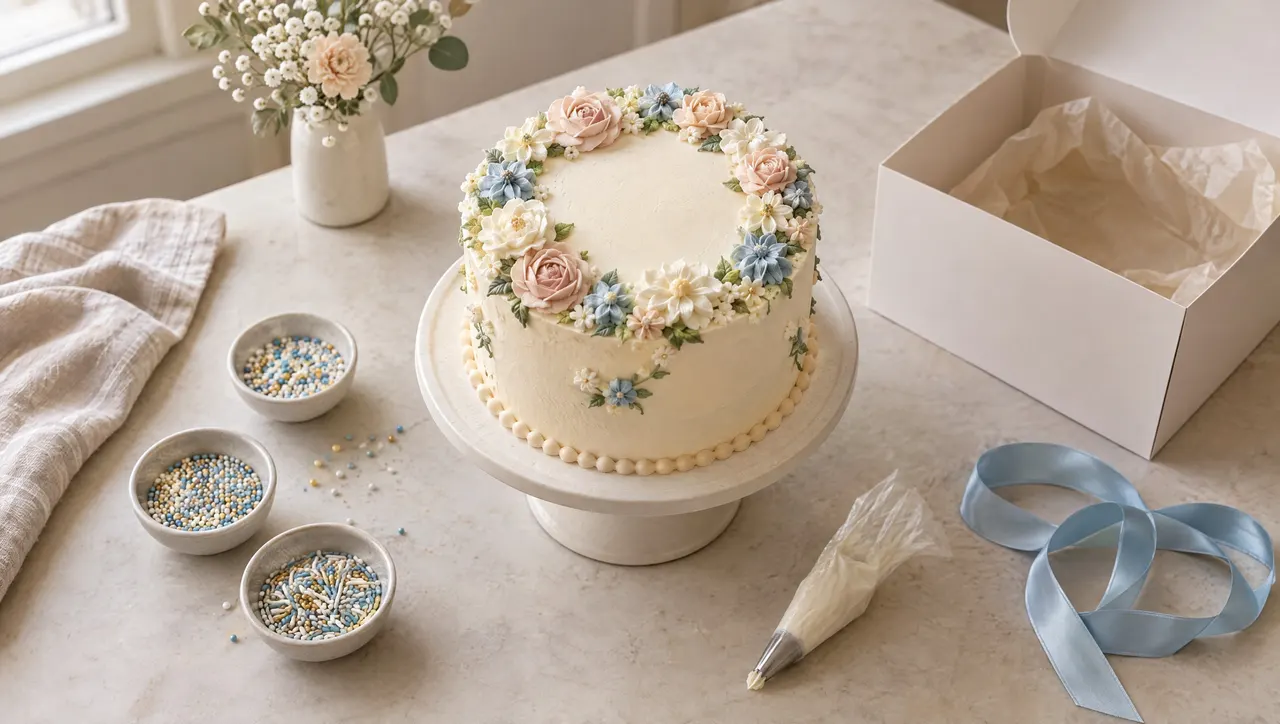
Short answer: save every order in the same format as soon as it is confirmed: customer, design brief, event date, pickup time, deposit and balance. Then give the customer a way to check status themselves. Cake orders fail in two specific places: a design detail agreed three weeks ago that nobody wrote down, and a balance nobody collected. Both are capture problems, not memory problems.
A customer messages you: “Can you make a two-tier fondant cake for my daughter’s birthday on the 15th?” You say yes, discuss the design, agree a price, and take a deposit.
Now where does all of that live? A notebook. A spreadsheet. Scrolled-back DMs. Your head. None of it survives ten orders a month.
Why are custom cake orders hard to track?
The date cannot move. Most businesses can absorb a day’s slip. A birthday cake delivered on the 16th is worthless. Every order carries a hard deadline attached to an event someone has planned around.
The brief is detailed and verbal. Flavour, tiers, size, colours, inscription, dietary restrictions, reference photos, pickup versus delivery, what time. Agreed in conversation, needed three weeks later.
Payment comes in parts. Deposit at confirmation, balance at collection. Across our order data, 26 of the 237 priced orders with any payment recorded were settled in more than one instalment, and 44 sat part-paid at any given moment. A “paid?” column doesn’t describe that.
Customers are anxious, reasonably. It’s for a wedding or a child’s birthday. There’s no second attempt. That worry is reasonable, and it arrives as messages.
Orders cluster. Weekends, holidays and wedding season stack deadlines. The weeks you most need a system are the weeks you have least time to maintain one.
What losing track actually costs
The obvious failure is forgetting an order. That’s rare and memorable.
The common ones are quieter. A missed detail, like buttercream instead of fondant or the wrong inscription, means making the cake again at your own cost. A balance never collected, because it was due on pickup and pickup was chaotic. A double-booked Saturday, discovered on Thursday. And the slow drain of answering “is it on track?” while your hands are covered in icing.
What does a cake order system need to do?
Capture at confirmation, not later. As soon as the order is agreed, save it while the details are in front of you. Anything deferred to “later tonight” doesn’t happen reliably.
Hold the full brief. Flavour, size, tiers, colours, inscription, allergens, pickup time. Written down, not remembered.
Show the week by date. Your scheduling constraint is the calendar. You need what’s due Saturday, at a glance, without opening anything.
Track deposit and balance separately. With the amount outstanding visible per order, so collection isn’t dependent on you remembering at handover.
Let the customer check for themselves. This is the piece most bakers don’t have, and it’s the one that removes the messages.
How much does the last one matter?
We looked at the 130 orders on WISMO whose tracking page was opened at least once (52 sellers, March to September 2026). Customers opened it a median of 5 times before the order was finished. More than a quarter were opened ten or more times.
Cake customers sit at the anxious end of that range, for the obvious reason. Every one of those checks is a message that didn’t need answering. The dataset is small: 434 orders from 81 sellers. It is published with its limits.
How to manage custom cake orders, step by step
At confirmation. Create the order with the customer’s name and contact, the cake description in as much detail as you can, the event date, the pickup or delivery time, the agreed price, and the deposit received. Send the tracking link with your confirmation message. When you share it at the start, the customer knows where to check the status.
Through the week. Update status as you actually reach each stage: confirmed, baking, decorating, ready. The customer sees each change without you writing anything. Add a note or photo at a milestone and it appears on their timeline. This is also when people often share the link with the person the cake is for.
At handover. Mark it complete and record the balance. The order closes with the payment settled rather than “I’ll remember to ask.”
Running the week
The view that matters is what’s due next, ordered by date. Before taking a new order for a Saturday, check what is already booked for that Saturday. A two-tier fondant cake and three dozen cupcakes is much more work than one delivery.
That’s also the honest way to decline. “I’m full that weekend” is a better answer than accepting and delivering something rushed.
Why it’s worth the setup
The practical case is straightforward: fewer remakes from missed details, fewer uncollected balances, fewer double-booked weekends, and fewer interruptions mid-bake.
The less obvious one is what customers take from it. A tracking page with your bakery name on it, showing real progress, looks like a business, not a hobby. Custom cakes are expensive, so that impression affects what people are willing to pay and whether they recommend you.
Start
WISMO is free for your first 30 orders, enough to run a real month of bakes before you decide. Create the first order in under a minute.
If you want to compare tools first, the order tracking apps for home bakers roundup covers seven options, including the recipe-costing tools that answer a different question: do your prices really work? The order management guide covers the wider process, and order management for cake businesses shows how WISMO handles due dates, deposits and customer updates for cake orders.
Common questions
What details should I capture for a custom cake order?
Customer name and contact, the cake description in as much detail as possible (flavour, size, tiers, colours, inscription, allergens), the event date, the pickup or delivery time, the agreed price, and the deposit received. Capture it at confirmation, while the details are still in front of you.
How do I stop forgetting cake order details?
Save it when the order is confirmed, not later. Anything left for "later tonight" does not happen reliably. Cake orders fail in two specific places: a design detail agreed three weeks ago that nobody wrote down, and a balance nobody collected. Both are capture problems, not memory problems.
How do I track cake deposits and balances?
Record the deposit against the order at confirmation and the balance at handover, with the amount outstanding visible per order. In our data, 26 of the 237 priced orders with any payment recorded were settled in more than one instalment, and 44 sat part-paid at any given moment.
Why are custom cake orders harder to track than other orders?
The date cannot move, the brief is detailed and agreed verbally weeks in advance, payment comes in parts, customers are reasonably anxious because there is no second attempt, and orders come together on weekends and holidays. So the weeks you most need a system are the weeks you have the least time for one.
How do I avoid double-booking a Saturday?
Check what a date already holds before accepting a new order for it. A two-tier fondant cake and three dozen cupcakes is a different Saturday from one delivery. "I'm full that weekend" is a better answer than accepting and delivering something rushed.
About the author
Ashish Vijay is the founder of WISMO, an order management app for small sellers and independent makers. He builds the product, talks to the sellers who use it, and writes these guides from what that work turns up.